


Almost 100 million Americans, representing about 44% of U.S. households, owned mutual funds in 2018....
Financial Wellness Center

Jan 06, 2026
Written By: Nate Garrison, CIO, World Investment Advisors; Anthony Silva, Senior Director of Strategy Management, World Investment Advisors
Key Takeaways:
1. U.S. Military Action And Strategic Goals
The U.S. captured Venezuelan President Nicolás Maduro on January 3, 2026, aiming to reopen Venezuela’s oil industry to American companies. This marks a major geopolitical shift and signals U.S. intent to reassert influence in the Western Hemisphere.
2. Limited Near-Term Impact On Oil Supply
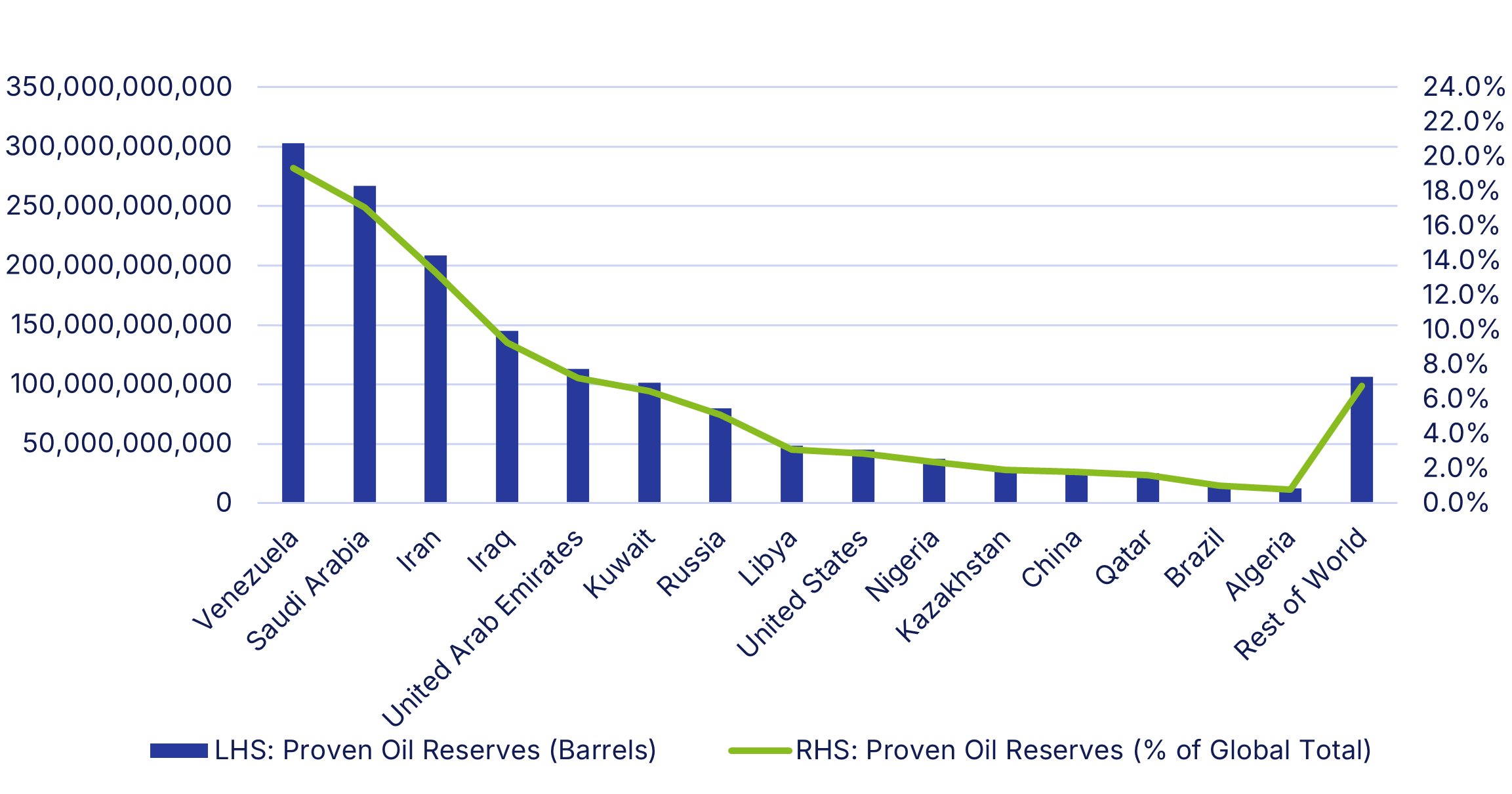
Despite Venezuela’s vast reserves (over 303 billion barrels, ~19% of global total), decades of underinvestment, corruption, and sanctions have severely weakened its oil infrastructure. Significant production recovery will require years of investment and technology.
3. Oil Price Outlook: Volatility Vs. Surplus
While uncertainty around Venezuela may increase price volatility, the U.S. Energy Information Administration (EIA) forecasts a global surplus of 2.2 million barrels/day, which could keep downward pressure on prices even amid political instability.
4. Geopolitical And Economic Ripple Effects
China faces significant impacts—over $60 billion in loans and reduced access to discounted Venezuelan crude—which may potentially reignite trade tensions with the U.S. For the U.S., long-term benefits could include lower energy costs and enhanced competitiveness, but immediate economic impacts are expected to be minimal.
5. Risks Of Prolonged Instability And Precedent
Continued unrest or resistance could push oil prices higher and strain U.S. resources. The intervention sets a “dangerous precedent,” raising concerns about global norms and potentially emboldening other powers to justify similar actions in regions like Ukraine or Taiwan. This could disrupt the global economic order and growth.
More details and analysis follow below.
U.S. Military Actions In Venezuela
The United States military captured Venezuelan President Nicolas Maduro and his wife in Caracas after a short military operation on January 3, 2026. This follows months of increasing tensions between the two countries, including, most recently, a naval blockade by the United States of oil tankers leaving Venezuelan ports.
Venezuela’s transition remains highly uncertain despite Maduro’s removal to U.S. custody. Some key questions are around who ultimately governs, the timing of any transfer of power, and how a successor regime would align with the U.S., manage relations with China and Russia, and interact with global energy markets. Venezuela is a critical component of the global oil markets. It holds the world’s largest oil reserves, with over 19% of global reserves totaling over 303 billion barrels as of 2024.
Chart 1: Largest Proven Oil Reserves by Country as of the end of 20241
Potential Impacts On Oil Production
Much uncertainty remains about the future of Venezuela and its government going forward. U.S. President Donald Trump made clear that one of his administration’s goals for the military actions is to reopen the Venezuelan oil industry to the United States. Many U.S. oil companies had extensive operations in the Venezuelan oil industry until the previous Venezuelan President, Hugo Chavez, expropriated major U.S. oil projects in 2007.
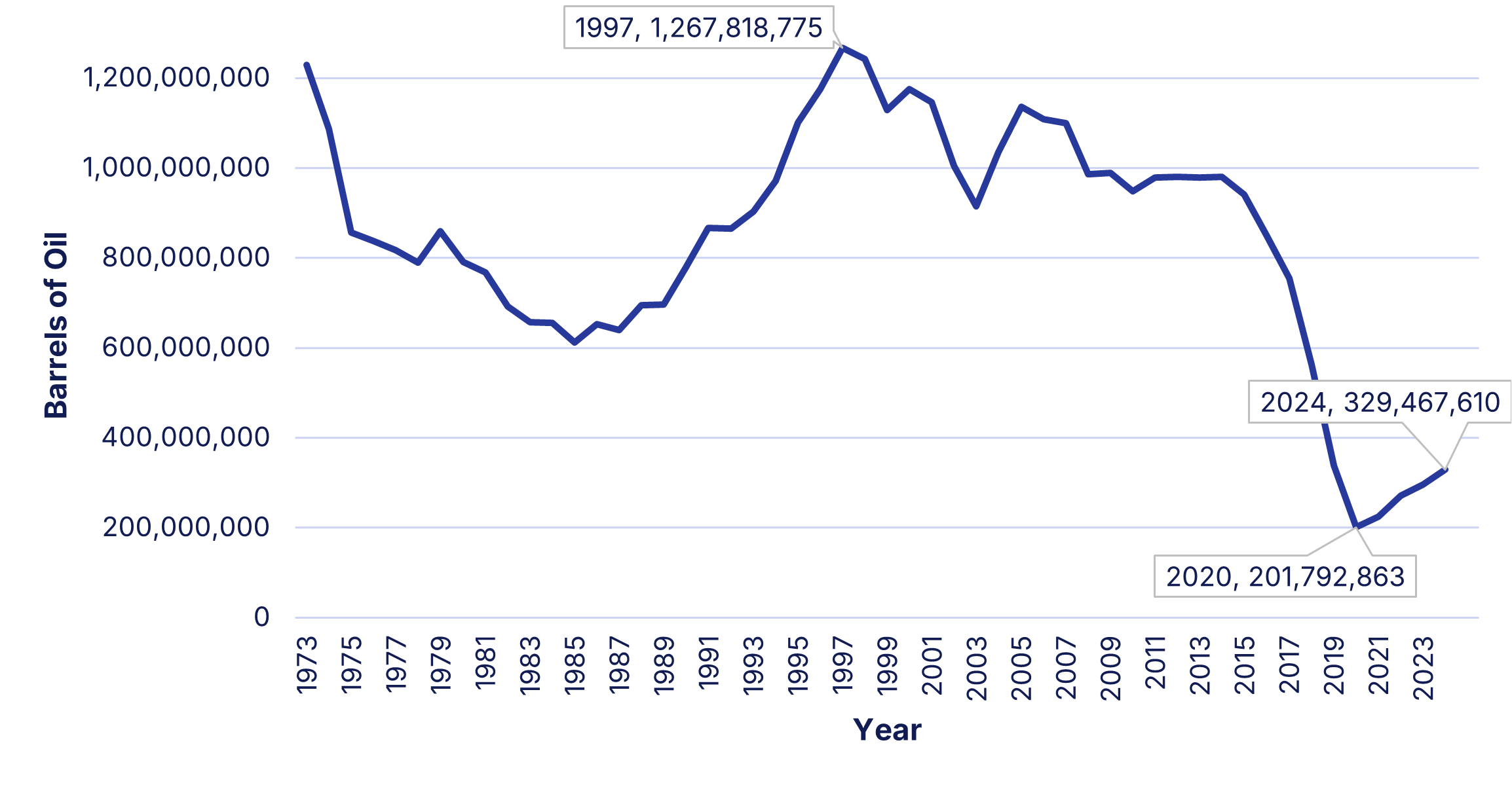
Despite this declaration from President Trump, we don’t expect there to be much impact on oil supplies in the near term. Despite their vast reserves, Venezuela’s oil industry has struggled in recent years to maintain or increase production. Decades of bad economic and industrial policy, rampant corruption, and sweeping sanctions from the United States have contributed to many years of underinvestment and infrastructure decay in Venezuela’s oil industry. Venezuelan oil production has suffered as a result, and it will likely take substantial amounts of money, technology, and time to bring Venezuela’s annual oil production back to the peak levels of the late 1990s. Compounding the issues, much of Venezuela’s reserves are expensive and technically difficult to extract (although that may be something that U.S. oil companies could help improve, given their immense technology and financial resources).
Chart 2: Historical Annual Oil Production by Venezuela, 1973-20242
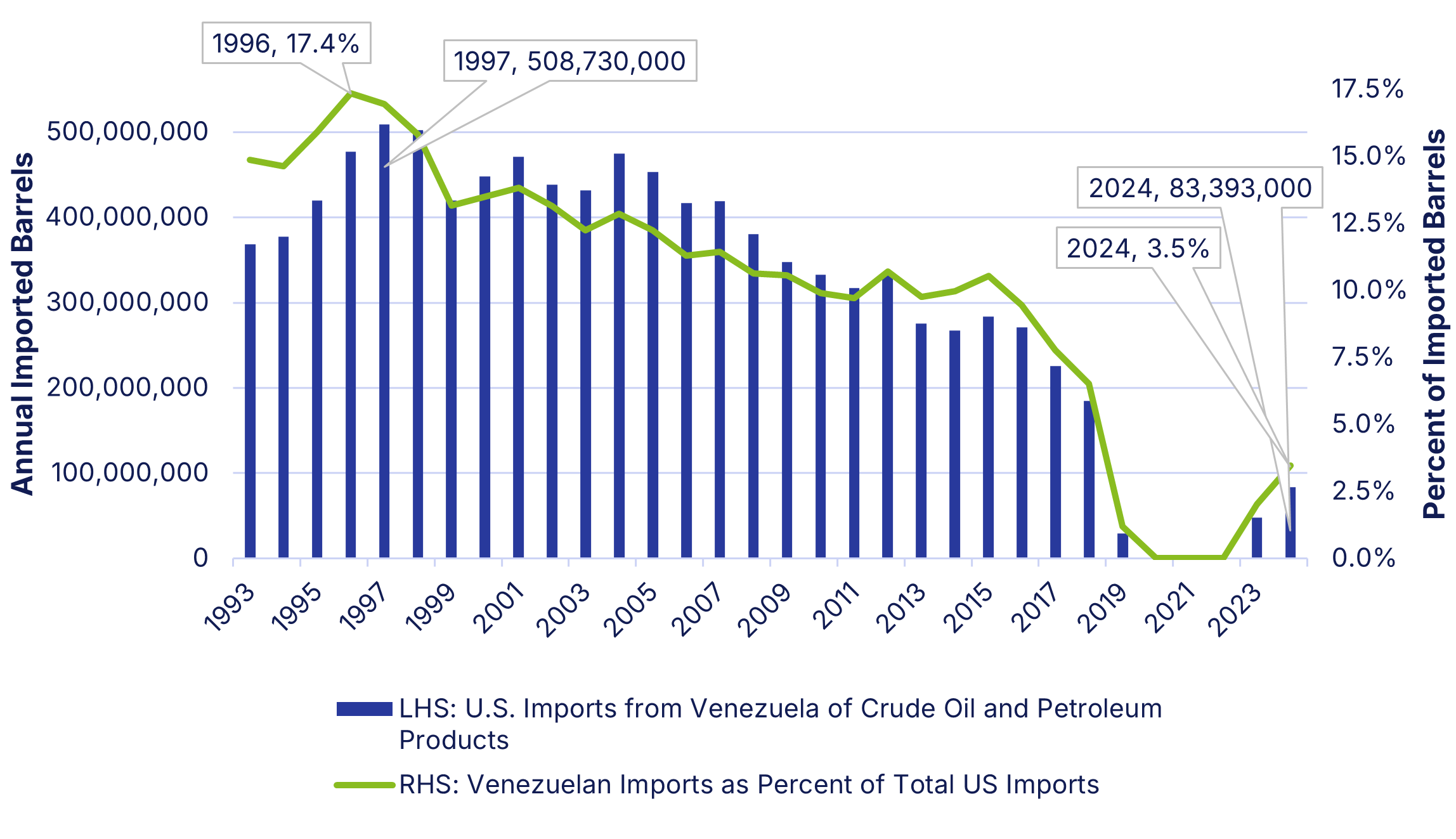
Prior to the ascent of the socialist government of Hugo Chavez in 1999, Venezuela accounted for approximately 15% of U.S. crude imports. Venezuela served as a source of over 10% of U.S. crude oil imports as recently as 2015. This dropped to zero between 2019 and 2023 as oil imports were barred near the end of the first Trump administration, and only recently started again. Outside of that period, the United States has consistently been one of Venezuela’s largest customers for its crude oil.
A peaceful shift toward a U.S.-friendly government would likely pave the way for sanctions relief. While the current embargo on Venezuelan crude is still in place, recent comments from the administration suggest that those restrictions could be lifted sooner rather than later.
At the same time, the risk of prolonged instability remains, particularly if loyalist factions or armed groups resist the transition. This could put upward pressure on oil prices if the instability is seen by the market as a threat to oil supplies. Any drawn-out conflict that is coupled with deeper U.S. involvement could also result in increased government spending, wider deficits, and a longer-term burden on U.S. taxpayers, similar to previous conflicts in the Middle East.
Given the challenges facing the Venezuelan oil industry, we expect it will be many years before Venezuela can begin to produce and export at levels that significantly offset the United States’ imports of crude oil from other countries, regardless of the political outcomes of recent events. For example, in 2024 the United States imported over 3.09 billion barrels of oil from dozens of countries (particularly Canada, which totaled over 1.7 billion barrels in 2024).3 In comparison, Venezuela produced less than 11% of that amount in total during 2024 (329 million barrels).
Chart 3: Venezuelan Oil Exports to U.S. and Market Share, between 1993 and 2024
Potential Impacts On Oil Prices
We think oil prices may experience increased volatility going forward. Uncertainty about the future of the Venezuelan oil industry has increased, and rising uncertainty tends to increase price volatility. However, the U.S. Energy Information Administration currently forecasts global oil markets will have a surplus of 2.2 million barrels a day.4 A global surplus of that size may keep downward pressure on oil prices even if Venezuelan exports decline in the near term due to a rise in political instability in the country.
Oil traded higher on Monday, January 4, 2026, but still remains approximately -20% lower relative to its levels one year ago.
Potential Impacts On The Chinese Economy
China stands to be the biggest geopolitical and financial loser from a shift in Venezuela’s oil flows, with more than $60 billion in outstanding loans and a key political foothold in the Western Hemisphere at risk.
While Venezuelan crude represents only about 4% of China’s and U.S. imports and is not systemically important to China’s energy security, the loss of discounted barrels would be felt by Chinese refiners, and Beijing may view the shift as another strategic setback, potentially reigniting geopolitical and tariff tensions that are already elevated.
Since U.S. sanctions were imposed in 2019, China has been the primary destination for Venezuelan crude, accounting for more than half of exports last year. A smooth transition towards a U.S.-friendly government would likely redirect those barrels back toward the U.S., materially reducing China’s access, even if limited volumes continue to flow there.
Potential Impacts On The U.S. Economy
Oil prices have a major influence on the U.S. economy. Changes in oil prices can have knock-on effects on consumer spending, with rising oil prices hurting spending, and falling prices propelling spending on other goods and services. The price of gasoline (an oil byproduct) also has an outsized impact on consumer views about affordability, given how widely and frequently it is purchased by consumers.
We expect limited immediate impacts on the U.S. economy from the recent events in Venezuela. Over time, Venezuelan crude may resume flowing more sharply and steadily to the United States, and those oil imports may contribute to lower fuel prices. Many oil refineries in the United States are designed to handle the particular grades of oil that Venezuela has so much in its reserves, so the addition of Venezuelan crude may lead to increased refinery production and lower prices.
Longer term, lower energy costs from additional Venezuelan crude oil in the U.S. (if any) may help accelerate “reshoring” of certain manufacturing in the ongoing trade war with China. Oil prices are a major input cost for a wide range of industries, especially those producing and consuming chemicals and plastics derived from crude oil. If the addition of Venezuelan crude oil puts sustained downward pressure on U.S. oil prices, then major industrial consumers stand to benefit the most.
Potential Geopolitical Implications
The U.S. is reasserting its dominance in the Western Hemisphere, signaling that the region is effectively off-limits to outside powers (i.e., China and Russia). The Maduro operation may also serve as a warning to uncooperative allies and weaker adversaries that they, too, could be at risk.
However, this approach risks weakening global institutions and normalizing unilateral action, setting what the U.N. Secretary-General has called a “dangerous precedent.” Other powers could exploit similar legal rationales to justify their own interventions. This could be particularly problematic in Ukraine and Taiwan.
President Trump’s embrace of unpredictability is also likely to deepen perceptions of U.S. foreign-policy volatility, encouraging other nations to hedge their bets through closer ties with other powers such as China or Russia and more deliberate strategies to deter U.S. pressure.
In Latin America, this dynamic may prove especially counterproductive, as China is already a dominant economic partner across the region. The swift condemnation from Colombia, Brazil, and Mexico underscores the risk that U.S. actions intended to project strength may ultimately accelerate geopolitical competition and undermine Washington’s longer-term influence and prove counterproductive to U.S. goals in the region.
The WIA Investment Team will continue to monitor policy, markets, and the economy, and provide you updates and our analysis in the weeks and months to come.
For assistance with your workplace retirement plan, please schedule a call with the SMARTMap Financial Advocate team here.
Sources:
1. Organization of the Petroleum Exporting Countries. Annual Statistical Bulletin 2025. Table 3.1, “World Proven Crude Oil Reserves by Country.” OPEC Secretariat, 2025, https://www.opec.org/assets/assetdb/asb-2025.pdf. Accessed 4 Jan. 2026.
2. U.S. Energy Information Administration. “Annual Petroleum and Other Liquids Production – Venezuela.” International Data, U.S. Department of Energy, https://www.eia.gov/international/data/country/VEN/petroleum-and-other-liquids/annual-petroleum-and-other-liquids-production. Accessed 4 Jan. 2026.
3. “U.S. Imports of Crude Oil.” U.S. Energy Information Administration, https://www.eia.gov/dnav/pet/pet_move_impcus_a2_nus_ep00_im0_mbbl_a.htm. Accessed 4 Jan. 2026.
4. “Short-Term Energy Outlook: Global Oil Markets.” U.S. Energy Information Administration, 9 Dec. 2025, https://www.eia.gov/outlooks/steo/report/global_oil.php. Accessed 4 Jan. 2026.
-
Like it? Share it:
-

-

-

You may also like


May 1, 2022
Approximately 157 million Americans are covered by employer-sponsored health insurance. From 2010 to...

Jan 21, 2026
Written By: Nate Garrison, CIO, World Investment Advisors; Anthony Silva, Senior Director of Strateg...