



Many people feel as though nearly everything costs more today. Travel, entertainment, groceries, and...
Financial Wellness Center

Aug 28, 2026
First, start by listing what you owe
Before picking a method, gather your balances, interest rates, and minimum payments. This gives you a clear starting point and helps you decide where extra dollars can make the biggest impact. Keep making at least the minimum payment on every account to avoid late fees or negative credit impacts.
The Debt Snowball Method
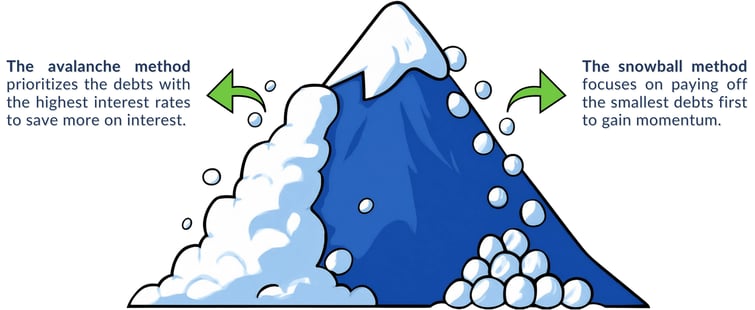
With the snowball method, you focus extra payments on your smallest balance first, regardless of interest rate, while making minimum payments on everything else. Once that balance is paid off, you roll the payment into the next smallest debt, and so on. This approach tends to be popular because the quick wins along the way can help keep you motivated. [1]
The Debt Avalanche Method
With the avalanche method, you focus extra payments on the debt with the highest interest rate first, while making minimum payments on everything else. Once that debt is paid off, you move to the next-highest rate, and so on. This approach tends to appeal to people focused on saving the most on interest over time. [1][2]
|
Feature |
Snowball Method |
Avalanche Method |
|
Main focus |
Smallest balance first |
Highest interest rate first |
|
Primary benefit |
Builds momentum with quicker wins |
Can save more on interest |
|
Best fit |
You like visible progress and motivation |
You are driven by cost savings & numbers |
|
Possible drawback |
May cost more interest overall |
First payoff may take longer |
|
Mindset |
Progress |
Efficiency and savings |
How to Kick Things Off
1. Pick one method for the next few months. Avoid switching every time you feel stuck. Consistency matters more than finding a perfect strategy.
2. Keep minimum payments current on every debt. This is non-negotiable no matter which method you choose. It protects your credit and keeps your extra payments focused where they matter.
3. Choose your target debt. For snowball, choose the smallest balance. For avalanche, choose the highest interest rate.
4. Find a realistic extra payment. Even a small amount above the minimum can help. Look for unused subscriptions, frequent impulse purchases, or one expense you can reduce.
5. Track progress monthly. Write down your balances, celebrate payoff milestones, and keep your reason for paying down debt visible.
6. Use windfalls intentionally. Tax refunds, bonuses, gifts, or side income can give your payoff plan a boost.
Why Paying Down Debt Matters
Reducing debt can create more breathing room in your budget and free up money for goals like emergency savings, retirement contributions, education expenses, or future opportunities. Just as important, having a clear plan can reduce stress because you know exactly what to do next.
The best debt payoff method is the one you will actually follow. If quick wins keep you going, try snowball. If saving on interest motivates you, try avalanche. Either way, small consistent steps can lead to meaningful progress.
Sources
[1] Investopedia: Debt Avalanche vs. Snowball: Which Debt Repayment Strategy Works Best?
[2] Fidelity: Debt snowball method vs. debt avalanche method: Which is right for you?
-
Like it? Share it:
-

-

-

You may also like

May 10, 2017
Buying a home can be a major expenditure. Fortunately, federal tax benefits are available to make ho...

Mar 18, 2019
As your parents age, they will probably need more help from you. But it may be difficult to provide ...